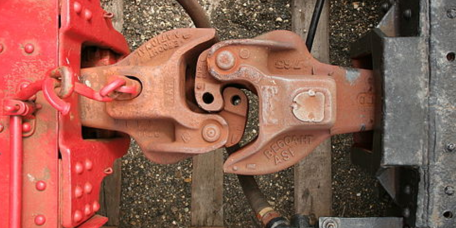
Walk up to a freight train and look where two cars connect. At first glance, the knuckle coupler — the standard system across North America — doesn’t look especially strong. The connection isn’t rigid, there’s noticeable slack and the cars can shift back and forth. To the untrained eye, that looseness might look like a dangerous design flaw.
But any rail engineer will tell you: that slack is intentional.
Tracks are never perfectly straight or level. As a train rolls over curves and bumps, each car reacts a little differently. If the coupler were perfectly rigid, those differences would push enormous stress into the connection. Over time, that stress could cause cracks, failures or even catastrophic breaks.
The genius of the knuckle coupler is engineered flexibility. That bit of give absorbs the jostling, spreads out the stress and keeps thousands of tons of freight moving safely across unpredictable terrain.
This idea isn’t unique to railroads. In construction, we build flexibility into systems all the time:
- Expansion joints in concrete and bridges look like gaps, but they prevent uncontrolled cracking when materials expand and contract.
- Control joints in masonry walls appear to break continuity, but they absorb movement and keep walls sound.
- Base isolation in essential buildings lets foundations shift during earthquakes, protecting the structure and everything inside.
In every case, what seems like weakness is actually the key to lasting strength.
Tough Doesn’t Mean Rigid
Our brains work the same way. Sometimes, talking about stress, anxiety or burnout can be seen as weakness — as if loosening your grip means you can’t handle the job. But that’s a dangerous misconception.
Like a coupler or an expansion joint, making space to process negative emotions isn’t a flaw in the system. It’s a design feature. Taking a break, talking with someone or using support resources gives you the flexibility to absorb life’s inevitable bumps and jolts. Without that give, stress builds until something snaps.
Rigid systems break under pressure. Flexible systems endure. People are no different.
Connections keep us on track
October 10 is world mental health day. This reminds us that taking care of our minds is just as important as caring for physical safety on the job. It’s also a time to remember that no one moves forward alone.
Couplers don’t work in isolation. They’re about connection — each car depending on the other to move forward. The same is true for crews. Supporting one another keeps the whole team strong and safe. Sometimes the most important strength you can show is asking for help — or offering it.